THE HISTORY OF THE FACTORY OF LINEN PRODUCTS IN ŻYRARDÓW
THE ORIGINS OF THE FACTORY
The origins of the linen industry in Żyrardów date back the early 19th century, when one of the most advanced factories in then Europe was built in Ruda Guzowska. To aid the development of the polish textile industry, the government of the Kingdom of Poland brought Philipine de Girard into the country – the inventor of a mechanised way to spin thread from linen. He played a very significant role in the expansion of the factory. The first phase of construction and the following equipping and putting things into motion was a period of trials and errors for the Linen Factory.
In 1829 a joint-stock company called “Karol Scholz I Współka” was established by Henryk Łubieński (Bank of Poland chairman), Józef Lubowidzki (the vice-chairman), Karol Scholtz (a commercial advisor to the Bank) as well as Jan Łubieński and Tomasz Łubieński (the act of incorporation was signed on August 9 th of 1830). The construction of an advanced textile mill – The Factory of Linen Products – was initiated after experimental linen production had been relocated from Marymont to Ruda Guzowska. Production in the Factory begun as early as in July 24th 1833, utilising over a dozen spinning machines. As the industry grew so did the factory settlement where the workers lived. The settlement was called Żyrardów, after the brilliant inventor and engineer, chief technology officer in the Factory, Philipine de Girard. Żyrardów soon became a melting pot of different cultures, as a result of migration, mostly motivated by economic reasons – majority of the factory workforce was Polish, but there were also weavers from the Czech Republic and skilled craftsmen from Germany. To keep production going required constant, expensive investments into the machinery park, its upkeep and modernisation. As time went on, the factory begun to struggle financially. The Bank of Poland refused to issue any more loans, and so, despite restructuring the factory and minor investments, in 1847 the Bank became the new owner of the Factory of Linen Products, by way of a judicial sale.
THE GOLDEN AGE OF THE FACTORY – INDUSTRIALISTS KAROL HIELLE AND KAROL AUGUST DITTRICH
Both Żyrardów and the factory experienced the greatest amount of development in the second half of the 19th century, when the factory changed hands and became the property of two German industrialists on March 13th 1857 – their names were Karol Teodor Hielle and Karol August Dittirch. It is thanks to their efforts that the factory transformed into one of the biggest and most advanced linen factories in Europe at the time. From that point on, the factory begun to change into a large, capitalised business, employing as many as 9 thousand workers. The amount of production departments was steadily increasing with the creation of such places like a mechanical weaving mill, cotton and wool spinning mill, a dyehouse and a stocking-manufacturing department. Additionally to all that, the machinery park continued to be modernised. The factory produced a wide range of linen and cotton products, including but not limited to: bedsheets, undergarments, serviettes, clothes and different types of stockings and stocking-adjacent products. These goods were sold through a network of stores in cities like Łowicz, Warsaw or Łódź, but also outside of the Kingdom of Poland: in Moscow, Kyiv and Saint Petersburg. The high quality of linen products is evidenced by the many awards and medals attained by the factory at a number of fairs and international exhibitions (e.g. in Vienna or in Philadelphia) as well as the title of the “Supplier of his Imperial Majesty” awarded to the factory by the tsar of Russia during an exhibition in Saint Petersburg. The development of the factory meant the development of Żyrardów as a whole, creating a unique urban architectural style. The city was divided into three – a villa district, industrial district and the factory settlement district.
The last one, was where dwelling houses stood along with different public buildings, such as churches, schools, a hospital etc. Regrettably difficult working conditions and dramatically low salaries were the cause of several worker strikes. Among them, the most well-known demonstration was the Strike of Female Spool Tenders in 1883, considered the first mass workers strike on polish territory and one of the first women-led worker strikes in the world.
SHAREHOLDERS ASSOCIATION OF THE ŻYRARDÓW MANUFACTURE HIELLE & DITTRICH
In the 70s-80s of the 19th century the Factory of Linen Products was being passed down to the descendents of Karol Teodor Hielle and Karol August Dittrich. On April 19th 1885, Karol Dittrich Jr., successor of the latter of the aforementioned industrialists, transformed the business into the “Towarzystwo Akcyjne Zakładów Żyrardowskich Hielle I Dittrich” [eng. “Shareholders Association of the Żyrardów Manufacture Hielle & Dittrich”]. It was because of him that the factory became a monopoly in the linen market and one of the biggest textile factories in Europe at the time. The turn of the 19th and 20th century was the period of serious investments. Such as, improving the machinery park and expanding more and more departments, among them the stocking-manufacturing department and the weaving mill. A new building was constructed at the beginning of the 20th century, the biggest industrial facility in the entire factory – the New Spinning Mill. Products manufactured at the factory were considered the uncontested best in terms of quality (as evidenced by the Grand Prix award, the highest honourable mention at the time, awarded to the factory at an exhibition in Paris in 1900). Given the factory’s various successes, the production line was expanded with cotton goods as well. The factory settlement grew proportionally to the increase in population – in 1897 it counted 20 thousand residents – absorbing neighbouring villages. Manufacturers from the factory expanded the factory settlement with new houses and new public buildings: churches, the hospital, the laundry, the public bathhouse, schools, ‘ochronka’ (a kind of daycare for orphaned children or children living in poverty), the community centre for workers as well as a social club with a bowling alley for factory managers and directors. Different community-based societies begun their activity, such as the singing societies “Lira” and “Echo” and first sports societies and organisations. In the face of increasing influence of political parties and a growing revolutionary sentiment a couple more worker strikes took place, including the second largest one after the Strike of Female Spool Tenders in 1883 – the mass strike of November 26th 1905.
WORLD WAR I AND THE INTERWAR PERIOD
The factory continued to develop dynamically, however, with the outbreak of World War I production was initially limited, before it was halted completely in 1914. German troops entered Żyrardów on July 16th 1915. That day also marked one of the most tragic events in Żyrardów’s history. On the night of 16th to 17th, retreating Russian troops planted explosives and blew the most important buildings of the Factory of Linen Products sky-high. The time of German occupation was a time of a significant decline in Żyrardów’s population, which coincided with the town receiving municipal rights in 1916. It wasn’t until November 11th 1918, after the city was truly liberated for the first time in its history, that the political life enlivened and competition to assume the mantle of power begun. The Workers’ Council was in control of socio-economic life and initiated the efforts to resume production in the Factory of Linen Products. Eventually, actions undertaken by the delegates lead to a takeover of the factory by the country’s administration on May 16th 1919. Renewing production was left in the hands of Władysław Srzednicki, an engineer well-liked by the workers. His search for loan opportunities, a market and the modernisation of the machinery park soon yielded in the factory’s growth – it managed to reach 85% of the production from the pre-war period. With the factory being rebuilt and social and economic recovery, cultural life as well as schooling and sports also begun to recuperate.
ŻYRARDÓW’S AFFAIR – BOUSSAC’S CAPITAL GROUP
Despite the post-war period of revival and increased residents’ involvement in the town life, the factory would soon have to face its darkest and most cruel period yet that nearly lead to the fall of Żyrardów. Everything begun in 1923, when the factory was acquired by a French capital group „Comptoir de l’industrie colonmere” owned by Marcel Boussac. Boussac introduced exploitative governing policies, which brought the Factory in Żyrardów to ruin. The Frenchman’s goal was to eliminate any competition to his own cotton-based business. That is why he purposefully decreased production, breaking every policy or law, turning Żyrardów’s factory into a colony of a foreign capital. During the time of Boussac’s capital group’s administration the management office was transferred to Warsaw. Most significant of all was the treatment of the workers. The directors in charge treated them horribly – terror reigned supreme, hiring organisation was changed, and mass layoffs lead to more and more worker strikes and manifestations. A Żyrardów-based writer and publicist, Paweł Hulka-Laskowski, described the picture of the collapsing Żyrardów and workers living on the verge of poverty. The state of the town was discussed and published in many articles at the time, the image presented by them becoming all too familiar. That depiction became even more relevant during the trial of Julian Blachowski, who on April 26th 1932 shot a key executive of the factory – Gaston Koehler. The murder trial transformed into a defence of Żyrardów itself, with the French capital accused of conducting a policy of plunder. During the trial all of Marcel Boussac’s machinations were revealed, and “Żyrardów’s Affair” became an international case. Opposition from small Polish shareholders towards the Shareholders Association’s administration lead to sequestration of the factory in 1934. The Polish government eventually bought back the factory in 1936, after the arrest of the directors – the factory was now managed by the State Agricultural Bank.
WORLD WAR II
On September 12th 1939 German troops entered Żyrardów, which begun the 5-year long period of German occupation. The Factory of Linen Products was taken over by Germans; once that happened, production was set into motion, but one that only served the needs of the occupant’s army. For Żyrardów and its residents it was a time of blood and terror, germanisation, many arrests of political, civic and union leaders, displacements into German territory for forced labour or into the concentration camps, executions and ruthless murders (among them, the November 18th 1943 execution by firing squad of 24 arrested people under the wall of the weaving mill). In the face of the occupant’s acts of repression, tough living conditions, hunger and poverty, an underground resistance movement was born. Factory workers were opposing the occupants by stealing products or purposefully slowing down production. Civic leaders taught polish youth in secret, spreading patriotic ideals to them. The ever-growing resistance boycotted German management, gathered intelligence and conducted sabotage and diversion operations – German train wagons were blown up on the tracks, telephone lines were cut, military operations were conducted and death sentences were passed on directors, managers and Volksdeutches despised by the workers. The Polish Worker’s Party’s District Committee and the Home Army are especially to thank for liberating Żyrardów. By the end of World War II, when German troops were undergoing preparations to blow up the factory buildings, on January 16th 1945 the Red Army entered the city, taking it back and preventing Germans from detonating the explosives.
They were forced to retreat, and just like that, the period of German occupation was over, after lasting exactly 1952 days.
POLISH PEOPLE’S REPUBLIC AND THE DOWNFALL OF THE FACTORY AFTER 1989
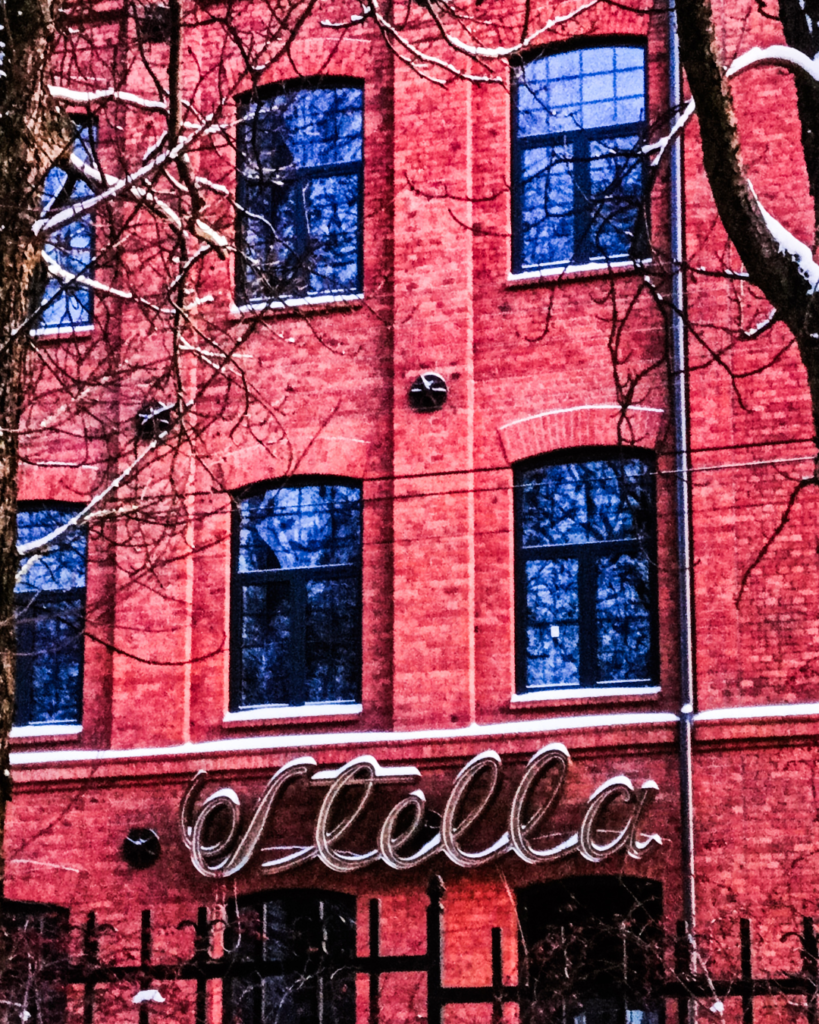
After the war has ended, and Żyrardów was freed, a new governing body begun to take shape in the city, instilling order and taking control over the economy, culture, schooling and everyday social life as early as January 18th 1945. The Factory of Linen Products, which had been seized by the country’s administration on January 19th 1945, which did not stop them from setting the production in motion with the beginning of February. The Three-Year Plan brought about significant organisational changes. In 1947 the Factory of Linen Products was renamed to “Państwowe Zakłady Włókiennicze nr 1 w Żyrardowie” [eng. “State Plant of the Linen Industry no. 1 in Żyrardów”] and between 1950-1952 the Plant was divided into specialised workshops, including but not limited to: “Żyrardowskie Zakłady Przemysłu Lniarskiego im. Rewolucji 1905 roku “Żyrardów”, “Żyrardowskie Zakłady Przemysłu Bawełnianego”, Żyrardowskie Zakłady Przemysłu Pończoszniczego „Stella”, Żyrardowskie Zakłady Przemysłu Odzieżowego „Poldres” and Żyrardowskie Zakłady Tkanin Technicznych im. Kasprzaka. The factory that employed over 50% of the actively working residents, once again became an international industrial centre of high-quality products, which were distributed to places like, France, Greece, Venezuela and England. The time of the Polish People’s Republic is one of post-war renaissance and relative prosperity. It is the period of development of cultural (Cinema “Słońce”, a theatre, a library) and educational institutions. Schools were rebuilt, a music school opened, and Karol Marczak’s Film Institute renewed its operations. A vacation house was organised for the factory workers as well as trade schools to further expand their mastery of textiles. Due to rising political tensions, on October 12th 1981 a workers strike broke out in Żyrardowskie Zakłady Techniczne. Two weeks later the protesters were personally visited by Lech Wałęsa. The factory’s standing changed dramatically in 1990s. As a result of the implementation of the 1989’s reform the factory couldn’t handle progress and announced a business failure of different departments. Once a business giant, the Factory of Linen Products closed down for good in 1999.
REVITALISATION OF THE 21ST CENTURY
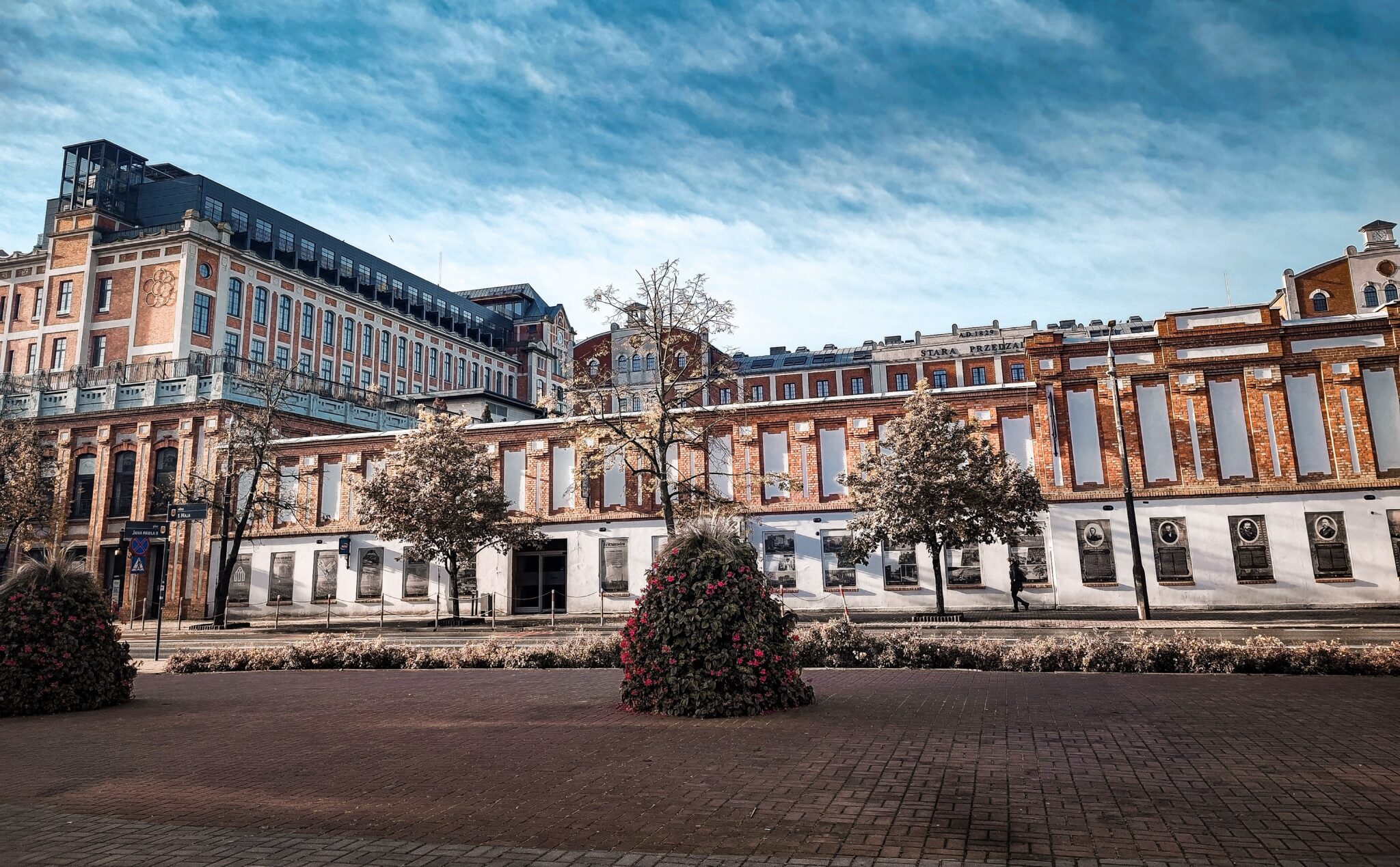
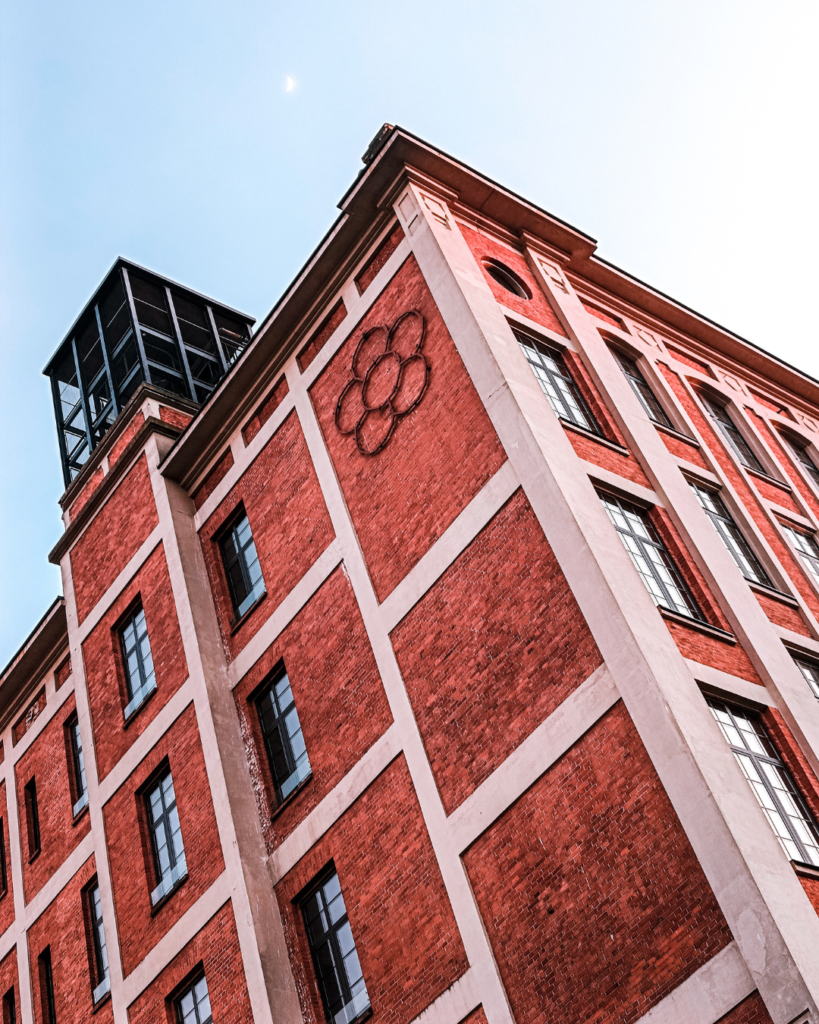
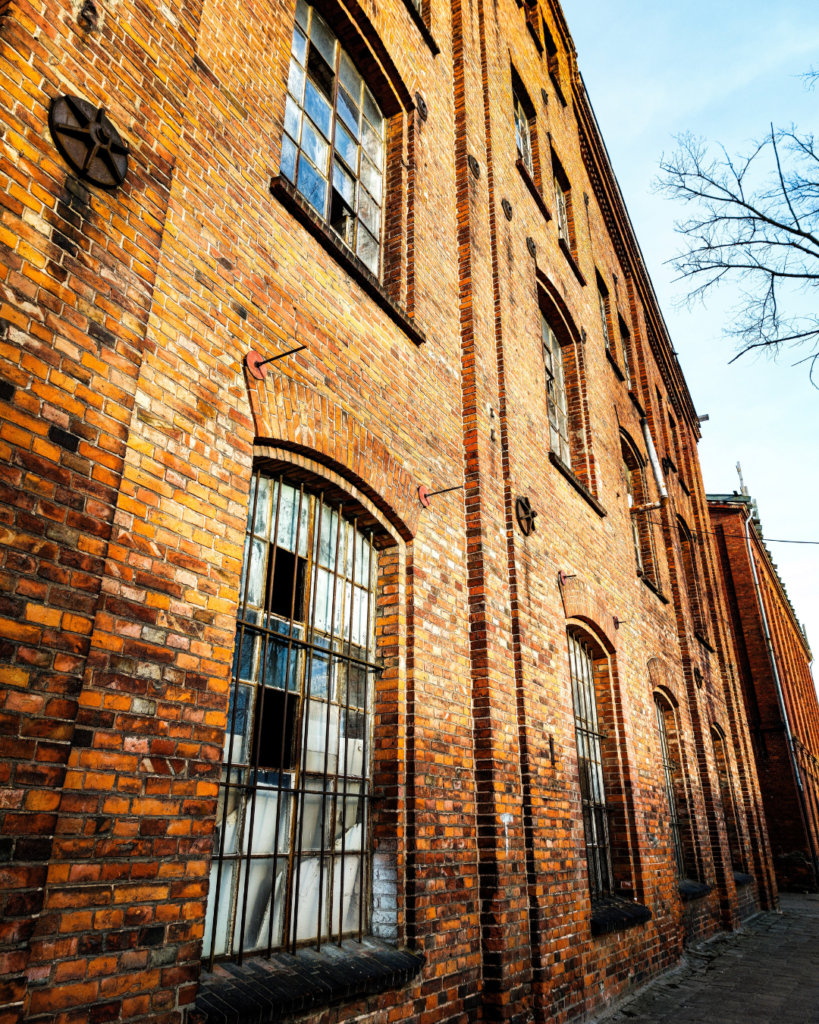
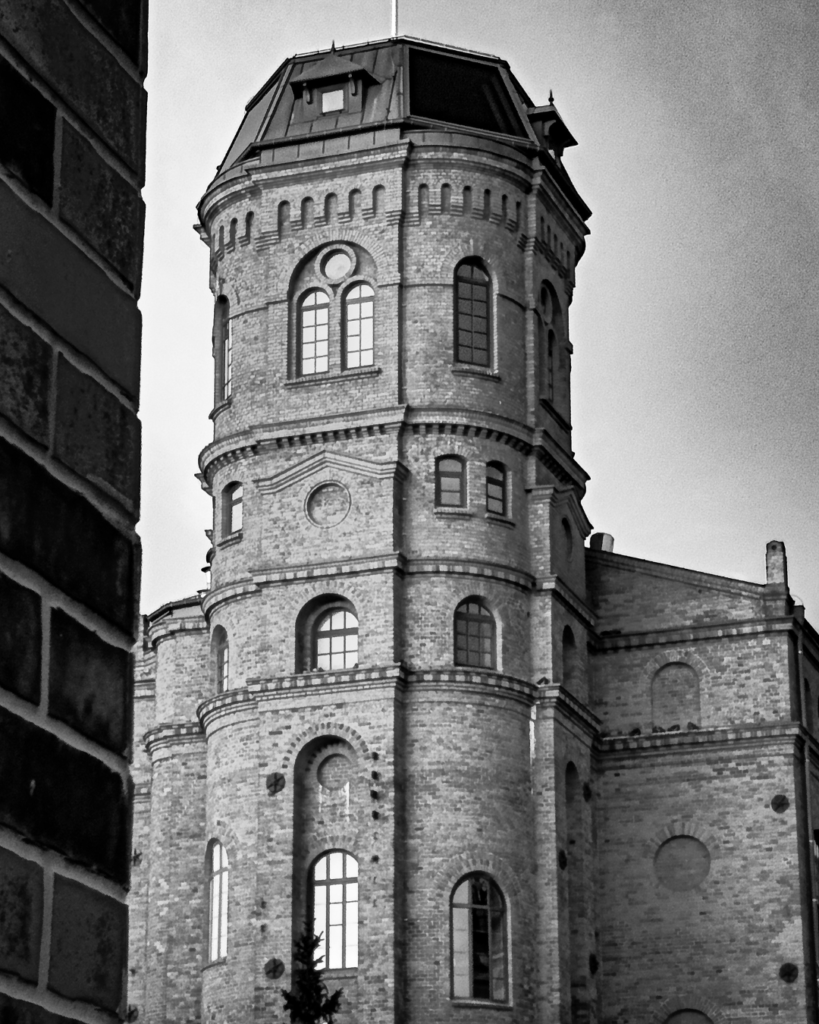
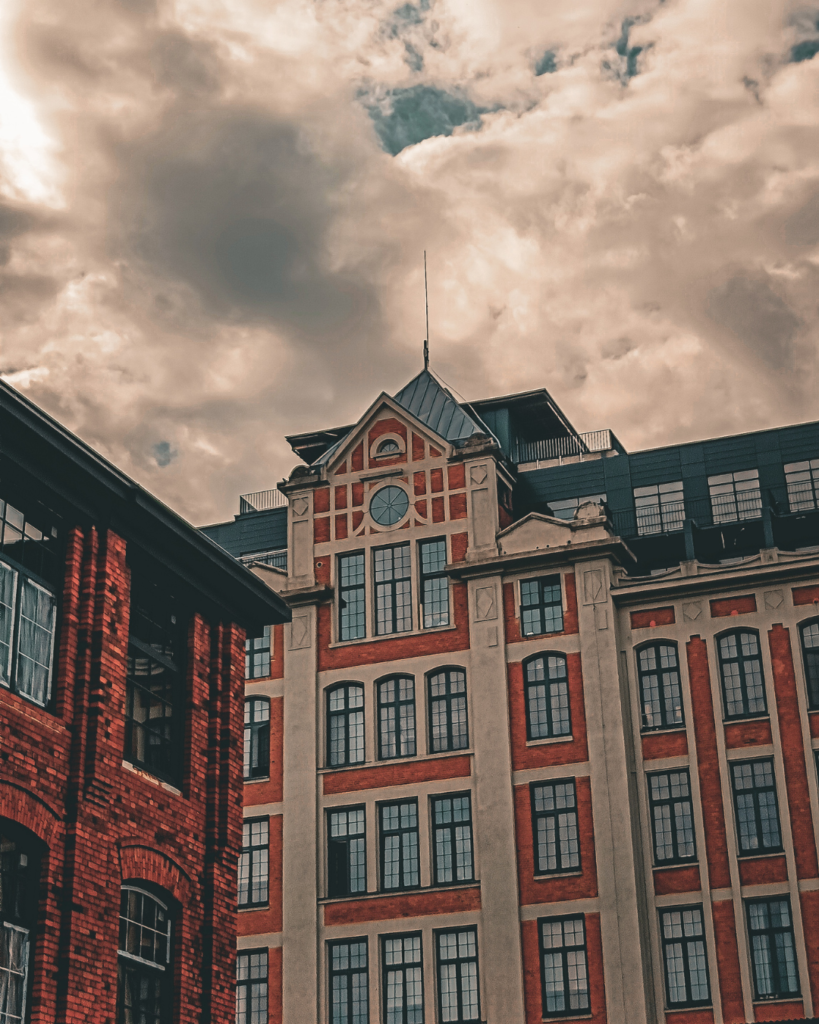
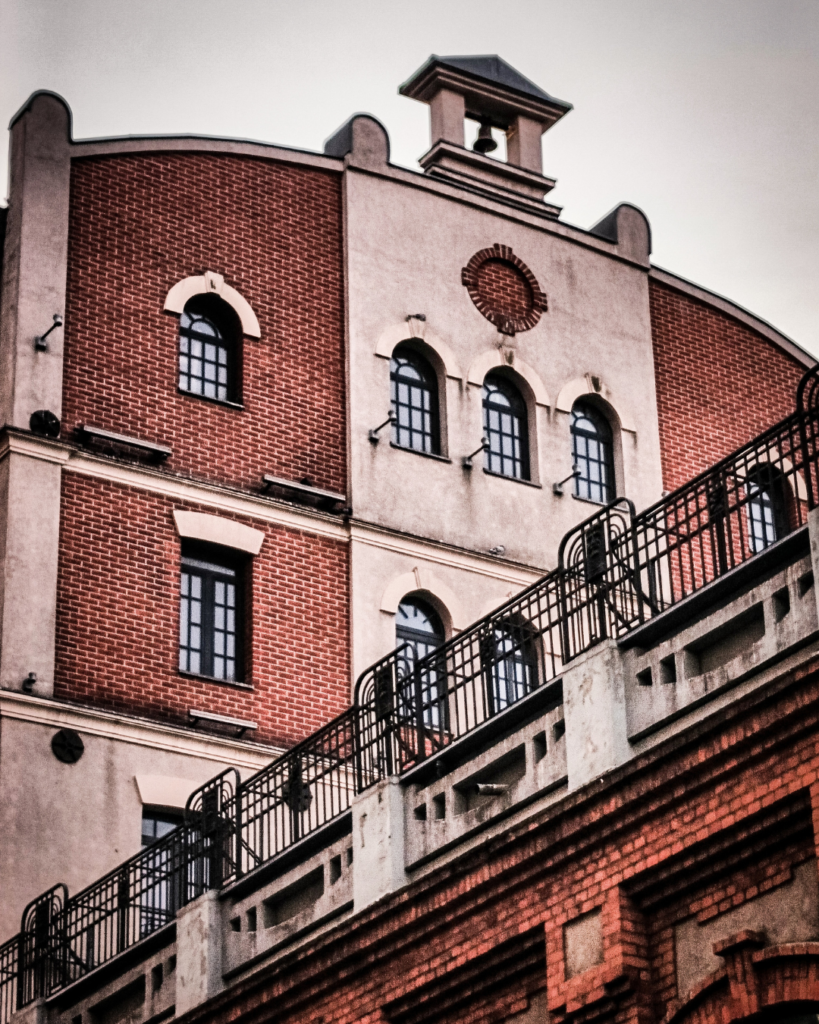
Although the downfall of the factory was irreversible, the linen tradition and textile production was continued by two private companies: co-partnership “Żyrardów. Fabryka Lnu” (1999 – 2012) and a smaller business “Tkaniny Żakardowe Andrzej Borzykowski” (1999 – 2019). With the beginning of the 21st century, the abandoned factory buildings caught the attention of the municipality and private investors, who together decided to maintain the unique, post-industrial character of Żyrardów. The factory settlement revitalisation process begun with the readjustment of the public park, the ‘Ochronka’ and the historic buildings housing the social club and the bowling alley. Żyrardów’s city officials took action to create the Philipine de Girard Linen Museum in Żyrardów – its role as a cultural facility is to bring awareness and introduce the history of the post-industrial identity of the city to younger generations. The most spectacular work is being undertaken by the private investors, it being the adaptation of the former Factory of Linen Products’ central office to account for lofts and shopping centres (one of the buildings that has been modernised is the old spinning mill). The adaptation of the biggest of the factory buildings, the new spinning mill, was being undertaken by co-partnership “Green Development”, but was abandoned due to the company going under in 2012. Żyrardów’s factory settlement is considered the only urban-architectural complex of an industrial city from the turn of the 19th and the 20th century remaining in its entirety in Europe. It is one of the most interesting tourist spots in Mazovia and a precious keepsake after the largest centre of the linen industry.
ŻYRARDÓW’S WEAVING TRADITIONS TODAY
Quick revitalisation of the factory buildings meant that Żyrardów became not only an interesting tourist destination, but also a 19th century industrial town with actively cultivated linen tradition. Although no other private weaving business operates in Żyrardów since 2019, the clatter of the looms and the voice of the factory still reverberates throughout the town. In 2020, the Linen Museum took measures to buy the machinery park from the last functioning company in the city “Tkaniny Żakardowe Andrzej Borzykowski”. The acquisition of sixteen original weaving machines allowed to resume production of linen fabrics in Żyrardów. By collaborating with former employees of the Factory of Linen Products, the machines are not only able to be preserved but are also used for demonstrations in the summer. The jacquard looms that changed their location three times (The Factory of Linen Products – a private company – The Linen Museum) are remarkable museum show-pieces today, enriching the exhibitions by adding an active craftsmanship element to it.



This post is also available in: